Project "Crop-connect": Co-creation a business strategy for the Kiwi fruits growers from AP state.

Updated: Nov 14, 2018

A holistic value chain approach to maximize the earnings for the small scale Kiwi farmers from Kamang district of Arunachal Predesh, India.
Project timeline
12th July 2014 - 22nd December 2014
Graduation project; six months long
10 Weeks execution time
Created at
Impact edge Lab: - Designing businesses for other 90%
A part of "Srishti School of Art, Design, and Technology"
Exhibited at

Project Detail
The project Crop-connect involves- design, technology, and business strategy to shortens the value chain, bringing value addition closest to the source to increase the revenue and prepares potential entrepreneur among the kiwifruit growers in Arunachal state in North-east, India.
In Arunachal state, a producer of kiwis has depressed prices of Rs 50 per Kg for the best quality at the farm-gate, while the same sells at Rs 350+ in urban markets in India mainly because of poor branding and infrastructure.
This project has aimed to design a sustainable business model that include eco-friendly farming, harvesting, processing practices and creating a branding which includes logo, packaging and consumer/retail experience to help farmers to access the mainstream market.


Early stage design process
This project is starts with a 2 weeks long design workshop followed by design thinking sessions to understand the impact business design while learning about different structures of companies, Business Model Canvas design, risks to sustainability for a business, responsibility of impact businesses (social, environmental, political, cultural), Partnership, investment and costing for any community development businesses.
The iterative and farmer/community centric design process is started with a market research and contextual inquiry phase where I interviewed different stakeholder and come up with insights to understand the aspiration of consumers from the targeted segment.

This quantitative data helps me to find the current competitive scenario to create transformational opportunities and possible stages for design interventions. The second stage of design research process leads me in the fields to understand the challenges and resources farmer have.

Challenge
Abrupt climate change is making difficult for the farmer to sustain their business and vey high investment is required to install the irrigation system and processing unit in the field which leads their business at high risk.
High Wastage during Picking, sorting, and grading of kiwi fruits.
Mainly because of poor branding and infrastructure, supply and consumer side is dominated by middle man.
Insight converted into design concept
Forming SHGs (Self Help Group) within the community: help farmers to share the resources and allow them to sustain their business.
Kiwi field design: By altering the traditional planting rows pattern to a hexagonal pattern with a male plant in the center, pollination rates, and yield capacity of female plants is increase by 30%.
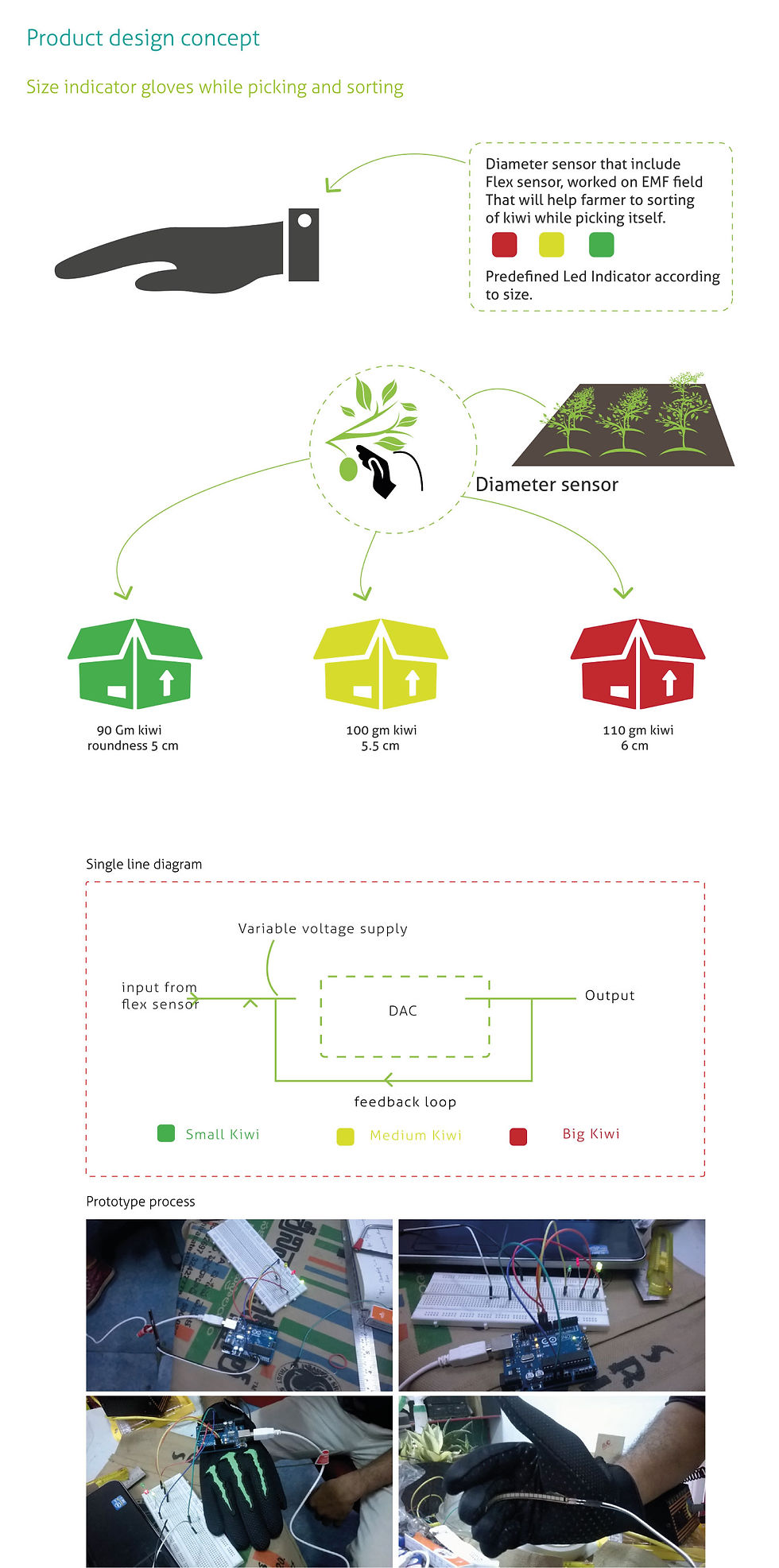
Fruits picking gloves design: Picking and sorting with an electronic sensor-equipped glove reduces the time and handling damage. This product combines picking, sorting, grading and packaging all at the same time. The supply improved by 4-5 days while the fruits last only for 15-20 days.
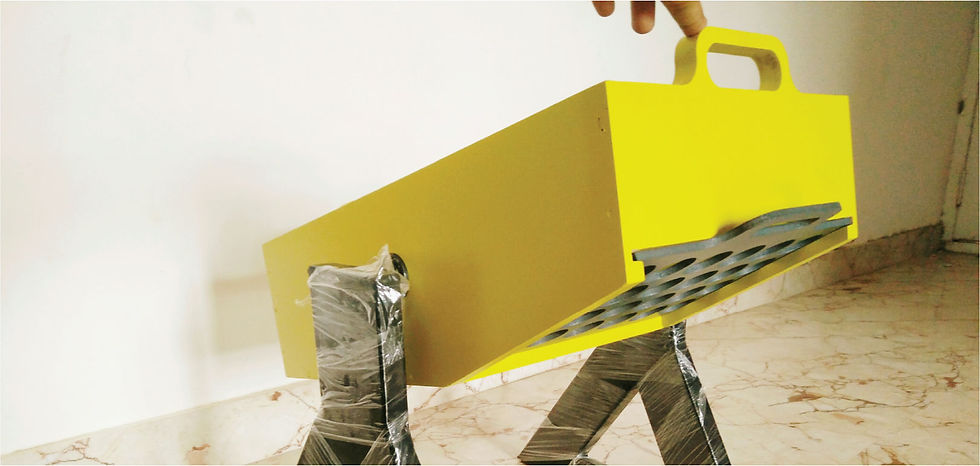
Kiwi automatic grader or sorter design: A low-cost tabletop swivel sorted the Kiwifruit in three different sizes in just one process.
Branding and Packaging design for formed SHGs [Self Help Group]: That offers protection during transit and takes into mind customer preference on quantity complete the loop.
Value addition products at farm gate: In addition, solar desiccation of lower grade fruit adds another stream of income for the farmer.



Impact on the community
Financially security: Revenue sources for the small scale farmers; The design interventions created awareness among farmers and allowed them to think with their entrepreneurial mindset, increasing their income 3 fold.

The formation SHGs (Self-help group) in the community: Which allowed economically poor individuals to gain strength as they could rely on other farmers in their group for resources, machinery and manual help to sustain their business.
An entrepreneurial mindset in the community followed by active members allows other to follow: This impact has shown in the journey of this project, in a such short time Project Crop-connect has grown to the six different states and listed many more produces product by small scale farmers.

Comments